
Queen's Domain Review: Is This Retro RPG Worth It?
Queen's Domain review explores its secret-filled island, deliberate combat, sword-powered traversal, and launch issues to help you decide whether to buy.
Jump to
Is Queen's Domain Worth Playing?
A broken bridge becomes an invitation once your sword can carry you across it. This Queen's Domain review comes down to that sense of possibility: a mysterious island, meaningful movement upgrades, and secrets worth remembering. For players who enjoy navigating by landmarks and learning through experimentation, the appeal is strong, though slow combat and unforgiving manual saves demand patience.
Developed by Freshly Baked Games and published by Future Friends Games, this first-person fantasy action RPG launched on Windows on October 30, 2026. Its closest point of comparison is King's Field, particularly the emphasis on deliberate movement, interconnected environments, and discovering how the world works without constant direction.
The central attraction is exploration. Combat gives that exploration danger and resistance, but the prospect of finding an unexpected route, useful weapon, or hidden upgrade supplies much of the momentum. If that sounds appealing, there is plenty here to dig into. If waiting between attacks already sounds irritating, pay close attention to the opening combat before buying.
An Island That Rewards Your Attention
You play a prince searching for his missing father on the Isle of Neasied. The king entered a sealed mausoleum with his soldiers, leaving you outside with a rusty sword and an island full of hostile creatures.

That straightforward setup leaves room for the environment to carry the adventure. Forest paths feed into ruins, underground passages reconnect with familiar landmarks, and elevators or gates turn lengthy journeys into manageable return trips.
There is no map or trail of quest markers. Your compass, recognizable structures, and memory do the navigation work. Finding a shortcut matters because you understand exactly how much ground it saves.
Exploration also involves more than choosing between corridors. Breakable obstacles conceal supplies, throwing weapons activate mechanisms, and hidden passages reward close inspection. Equipment can solve environmental problems as well as kill enemies.
The world changes as you progress, too. Enemy placements shift after certain objectives, and familiar locations can become more threatening on a return visit. Backtracking carries some uncertainty even when you know the route.
The drawback is visibility. Small items and puzzle pieces can blend into the scenery, making progress depend on spotting something easy to overlook. That can turn an interesting search into repeated laps through an already familiar room.
Keep brief notes about locked doors, unreachable ledges, and unusual landmarks. Include a compass direction and nearby structure so a movement upgrade gives you somewhere specific to revisit.
Holy Sword Endu Makes Backtracking Exciting
The Holy Sword Endu gives the island's vertical design a purpose. Its Wind Dash carries you through the air, turning broken bridges and separated platforms into routes you can cross.
Additional Wind Gems expand your available dash charges. Getting a second dash changes which gaps you can clear and gives previously inaccessible ledges a practical use. Progress comes from both acquiring equipment and recognizing what that equipment makes possible.
This creates a satisfying reason to remember places you cannot reach yet. A distant platform can become a future destination rather than background scenery.
The Azure Torch extends that connection between equipment and exploration. It provides light, launches blue fireballs, and helps solve the island's beacon puzzle. Its magical energy recharges while equipped, even when another weapon is active.
These tools give the adventure its own identity beyond its King's Field influence. Endu changes how you read distances, while the torch encourages you to examine structures for another kind of interaction.
Revisit earlier areas after finding another Wind Gem. Look above established paths and across broken structures before pushing deeper into unfamiliar territory.
Combat Rewards Spacing and Weapon Choice
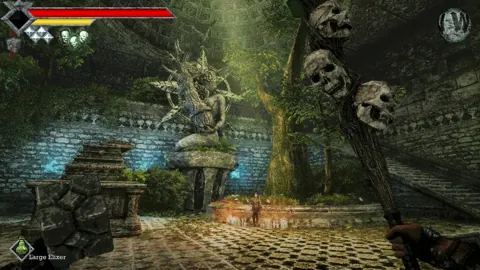
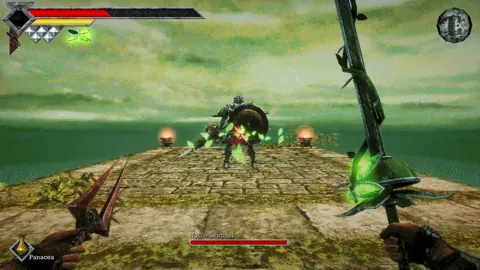
The yellow Power Meter determines the strength of your melee attacks. Swing with a full meter and you deliver proper damage; attack repeatedly while it is empty and your effectiveness collapses.
Running also drains that meter. Rushing toward an enemy can leave you standing within striking distance with little power behind your next swing.
The basic rhythm is measured: draw out an attack, move beyond its reach, strike during the opening, and give your meter time to recover. There is no traditional dodge roll, block, or parry to absorb mistakes. Positioning carries that responsibility.
Holding the primary attack button charges a stronger blow. Let the Power Meter refill before releasing your charged strike.
Damage types add another decision:
| Early weapon | Damage type | Enemy weakness to exploit |
|---|---|---|
| Rusted Short Sword | Slash | Ratty Bugs |
| Rusted Spear | Pierce | Chickets |
| Wooden Club | Impact | Skeletal Fighters |
Check weapon descriptions rather than judging damage type by animation. A sword thrust still uses the weapon's listed damage type. The bestiary helps you match equipment to enemy weaknesses and also records potential drops.
Rechargeable throwing weapons keep the pauses between melee attacks useful. The Dagger Belt starts with three replenishing daggers, giving you a way to pull individual enemies, attack flying creatures, and remove elevated Forest Eyes.
Acquire that belt early. Its ranged attacks make the opening area's laser-firing plants much easier to handle.
The system has a clear limitation: repeated retreats and charged strikes can become monotonous, especially against enemies with large health pools. Weapon variety adds options, but it does not erase the deliberate pace.
Progression Makes Exploration Pay
Character growth follows a familiar experience-based structure. Defeating enemies earns EXP, and leveling increases maximum Life Points and base Attack Power.
Weapons also gain proficiency through use, improving their performance. That gives you a reason to keep using a favorite, although enemy resistances still encourage carrying alternatives. You can equip three melee weapons and switch between them quickly.
Endu develops further as it levels, eventually transforming into stronger forms. Its continuing growth helps keep the signature traversal weapon relevant in combat.
Food supplies another reason to search optional spaces. Broiled Meat permanently increases Attack Power, while Roasted Poultry permanently increases health. Finding a platter can therefore make a lasting difference to your character.
Accessories provide stat buffs, and Ancient Coins fund purchases at the shop unlocked after the opening boss. Additional throwing daggers increase how many you can hold before waiting for them to recharge.
Spend time investigating side routes and destructible containers. Between permanent food bonuses, equipment, currency, and healing items, exploration feeds directly into your ability to survive.
Manual Saving Raises the Stakes
Saving happens manually at Crystal Monuments. Death sends you back to your latest save, taking every unsaved discovery, item pickup, and completed objective with it.
That gives a successful expedition tension. Finding valuable equipment creates an immediate decision: continue exploring or return to secure it.
Saving and resting serve different purposes:
- Save to preserve progress without triggering the enemy respawns caused by resting.
- Rest to restore health and remove negative status effects, while bringing enemies back.
Enemies also respawn over time, so an area you cleared earlier can become dangerous again independently of resting.
Save after major objectives, valuable pickups, and newly opened shortcuts. Before entering an obvious boss arena, return to a nearby Crystal Monument if the route allows it.
Keep a Travel Crystal Fragment for an emergency retreat when you risk losing substantial progress. Consuming one returns you to the last Crystal Monument used.
The responsibility for preserving your progress remains yours.
Retro Atmosphere Meets Launch-Day Rough Edges
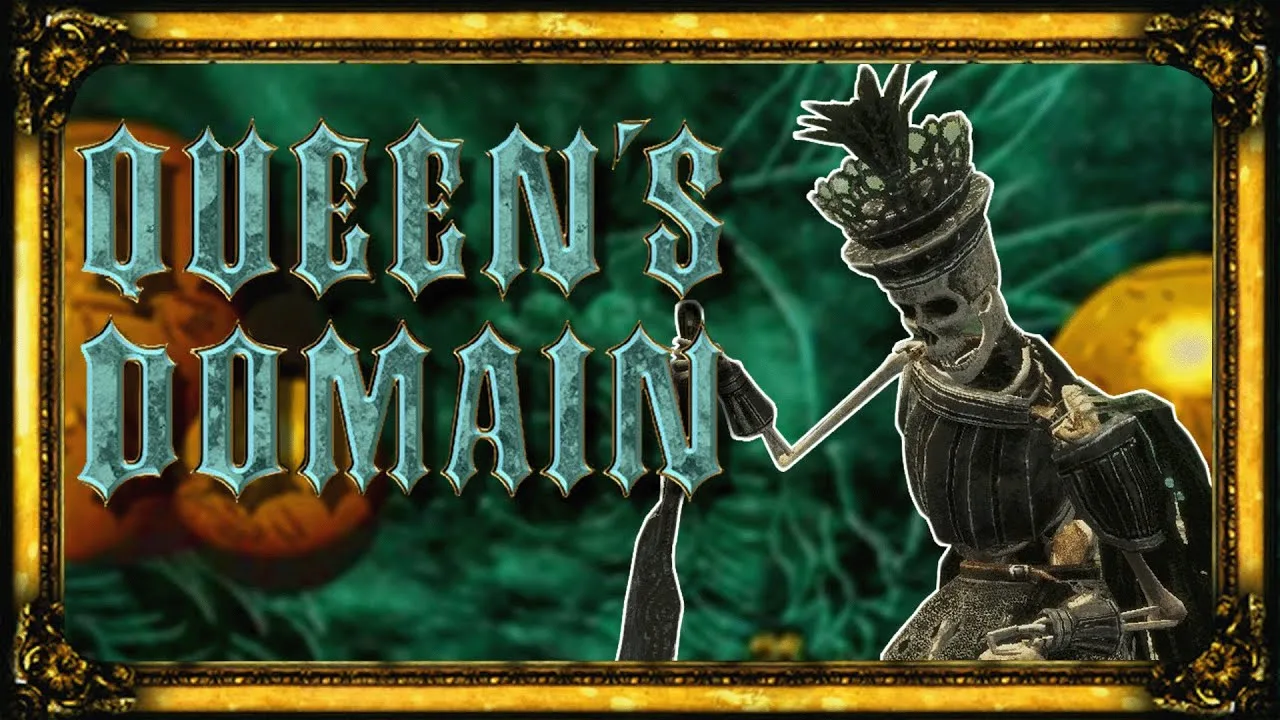
The visual identity combines lush vegetation, weathered stonework, unsettling ruins, and strange hybrid creatures. Ratty Bugs and laser-firing flowers give the island a peculiar personality alongside its undead warriors and darker spaces.
The retro presentation includes adjustable resolution and dithering options. Reduce those effects if you want a clearer image while keeping the underlying art direction.
The soundtrack carries a similarly distinctive character, including an unusually playful merchant theme. Its prominent melodies and quirky instrumentation make music a matter of taste, especially during repeated visits to the same area.
Technical problems deserve more attention because manual saving makes interruptions costly. The October 31 version 1.01.01 update includes fixes for a Pit of Despair soft lock, freezes during weapon evolution and Mimic encounters, a stuck Executioner door, missing water return pits around Neasied, and Star Lizard bags becoming suspended in midair.
Install the update before starting a long session.
Steam Deck has a Verified rating, functional default controls, and legible interface text. Launch performance is less consistent: the full game can suffer frame drops into the 30s and uneven frame pacing, while other sessions run smoothly with occasional dips. Handheld compatibility should therefore be considered separately from an expectation of steady 60 FPS.
Price, Length, and Trying the Demo
The base price is $19.99, with a 15% launch discount during launch week. The estimated adventure length is 40+ hours, although searching for secrets and finding your way through the island naturally affect completion time.
The feature set includes more than 50 melee weapons, more than 20 secondary throwing weapon types, and over 100 enemies, minibosses, and bosses combined. Those numbers suggest considerable room for experimentation, but the more useful buying question is whether you enjoy the underlying rhythm of exploration and combat.
The free Steam demo covers the opening portion through the encounter leading to Endu. It lets you try the Power Meter, rechargeable daggers, enemy weaknesses, and manual saving before committing to the full adventure.
Download the Queen's Domain demo or buy the full game on Steam. Use the opening area to judge the combat pace, and explore beyond the obvious path to see whether discovering another passage makes you want to keep going.
Continue with
 Queen's Domain Walkthrough: Reach the Mausoleum GateFollow this Queen's Domain walkthrough from the beach to the mausoleum, with Wind Gem locations, all four slates, gargoyle solutions, and boss strategies.
More in Guide
Queen's Domain Accessories: Stats, Charms, and Shops
Learn how Queen's Domain accessories affect your stats, where to find and buy them, and how to choose resistance bonuses against dangerous island enemies.
Queen's Domain Achievements: All 53 Unlocks and Route
Track 53 Queen's Domain achievements with exact unlock requirements, collectible goals, boss milestones, four endings, and a practical completion route.
Queen's Domain Beginner Guide: Survive Your First Hour
Queen's Domain beginner guide: learn combat timing, find early weapons, save safely, uncover hidden routes, and prepare for your first boss on Neasied.
Queen's Domain Demo Guide: Daggers, Keys & Boss Tips
Explore the Queen's Domain demo with a route to the Dagger Belt, shrine key, and boss, plus combat tips that help you save herbs and protect progress.
Continue exploring
Join the community
Official channels for news, updates and player help: